Facts checked 2026-11-15.
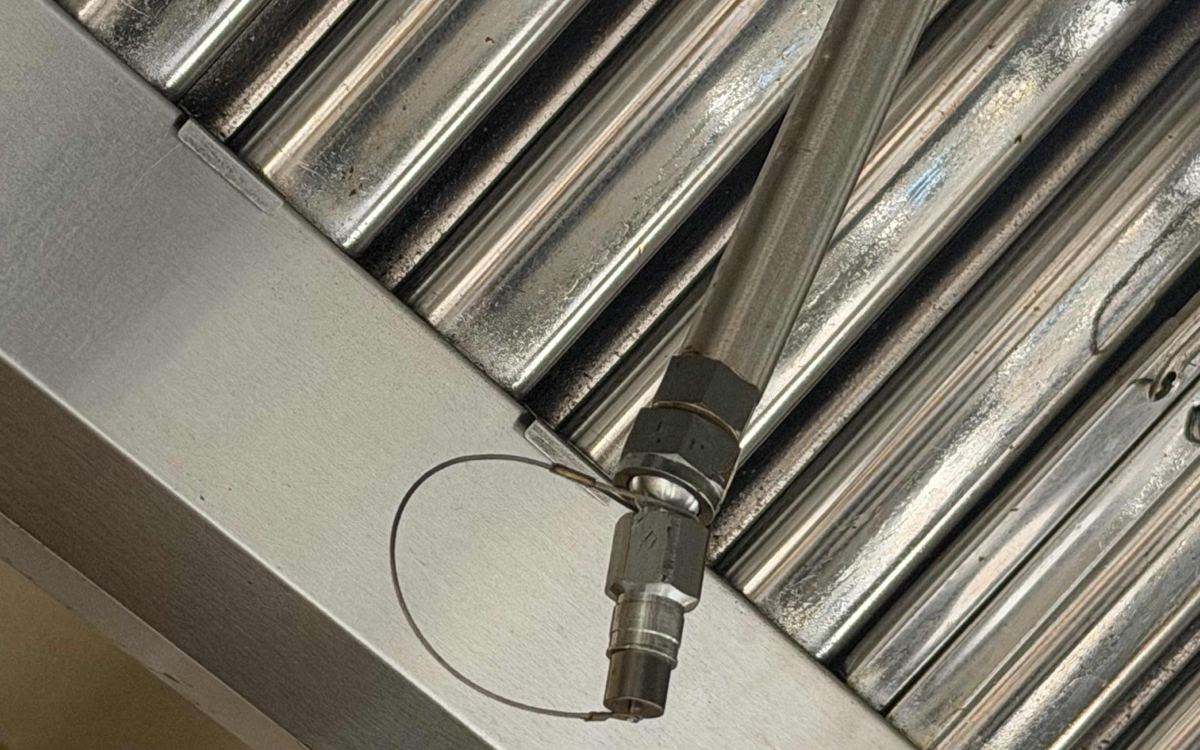
The system above your cooking line, the one that sprays when a fire starts, has to be installed and serviced by a Georgia licensed firm. Send your request for a new system, a change or an inspection, and Georgia Commercial Kitchen Connect passes it to fire suppression companies, licensed where the law requires it.
What the state requires
Under Rule 120-3-3, each required commercial kitchen exhaust hood and duct has an approved automatic fire-extinguishing system. The rule adopts NFPA 17A, the wet chemical standard, in its 2024 edition, effective May 27, 2025. Georgia used the 2013 edition before that. A system put in under an older edition is a question for your fire marshal.
Who is allowed to do the work
Rule 120-3-23 licenses the firm and permits the technician. A technician works for a licensed firm and holds a kitchen technician permit. A firm must be a Georgia corporation and show liability insurance of at least $1,000,000.
Some licenses are narrower than others. A firm licensed on one manufacturer's certification may only work on that maker's systems. If your hood carries a particular brand, ask the company whether its license covers it.
Get prices for this job. Send one request and pick how many local companies quote it.
Get quotesWhat the blue tag tells you
The tag on a suppression system is light blue, 3 by 5.5 inches. Read it for these items:
- the firm's name, address, phone and license number
- the technician's name and permit number
- the system's serial number
- the service done and the month and year
A new tag goes up with each service, and only the current one stays on the system. On a battery-powered control panel, the tag and the battery show when the battery is due for replacement.
If the system stops working
The state's NFPA 17A changes say cooking equipment must not run while the protecting system is not operating or is impaired. When a firm finds a system short of its design capacity, it puts a non-compliance tag on it and sends a report to the fire authority. The owner then tells the fire authority in writing within 24 hours, under the NFPA 96 changes.
Records to keep
Keep every maintenance report for three years after the next maintenance of that type. The licensed firm keeps its own records for at least two years. A folder in the kitchen office works well.
Where plans go
The Safety Fire Commissioner's office reviews safety fire plans for some building types through its portal. A restaurant's plans may go to the state, the local fire marshal, or both. Ask the fire marshal for your address. Gwinnett County lists suppression systems among its permits, and Atlanta schedules fire protection inspections.
Before the first call
Gather the facts a company will ask about. Write down the brand and age of the system if you know them, which appliances sit under the hood, and whether you plan to move or add any. Cooking appliances that move under a hood can leave the nozzles pointing at the wrong place, which is why a change to the line is its own kind of job. Keep the last tag and report where you can read them.
Questions
Who can service a restaurant fire suppression system in Georgia?
Restaurant fire suppression service in Georgia takes a company that holds a Safety Fire Commissioner license under Rule 120-3-23. The person doing the work also needs a kitchen technician permit.
What color is a kitchen suppression system tag in Georgia?
Light blue, 3 by 5.5 inches. It shows the firm's license number and the technician's permit number.
How long should a Georgia kitchen keep suppression system records?
Three years after the next maintenance of that type that NFPA 17A requires.
Can a kitchen keep cooking with the system impaired?
No. The state's NFPA 17A changes say cooking equipment may not operate while the protecting system is impaired or not operating.
Sources
- Georgia Rule 120-3-3, State Minimum Fire Safety Standards (OCI PDF)
- Georgia Rule 120-3-3-.04, adopted standards and history
- Georgia Rule 120-3-23-.06, firm licenses for kitchen systems
- Georgia Rule 120-3-23-.07, technician permits for kitchen systems
- Georgia Rule 120-3-23-.13, service and records
- Georgia Rule 120-3-23-.14, tags
- OCI safety fire plan review
- OCI licensed professionals search